











Development story
Behind the development of Akesola Air lies a bitter memory of the creator’s own. The day before a flight, despite setting several alarms before going to sleep, he unconsciously turned every one of them off and woke up just an hour and a half before departure. With a taxi as his last hope, he arrived one minute before the gate closed and somehow made it in time — but the lesson came at a steep price: an expensive taxi fare.”
This experience sparked a search for an alarm that could guarantee waking up. After researching every kind of alarm, he purchased a certain air-powered wake-up device, renowned as one of the strongest alarms and trusted by railway staff. It lived up to its reputation, and he was deeply impressed by how reliably it woke him. Believing that this technology, something Japan can truly be proud of, deserved to be known around the world, he set out to bring it overseas. However, he soon ran into major obstacles: a high unit price, heavy weight, and differences in power standards.
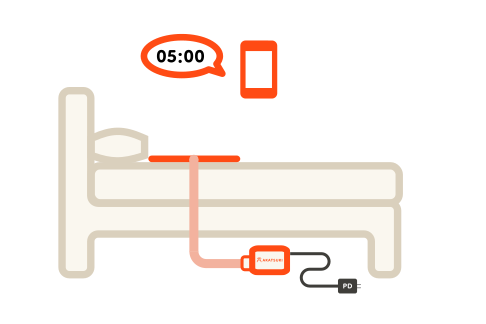
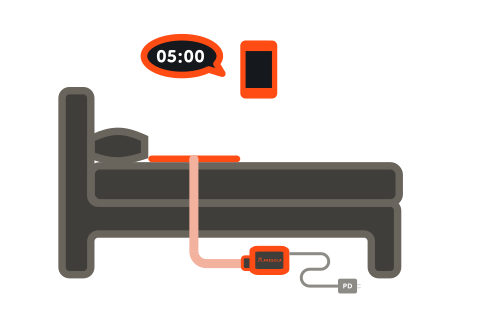
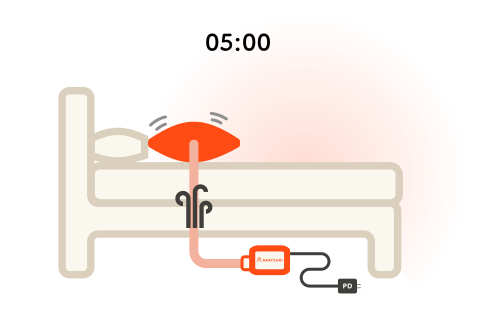
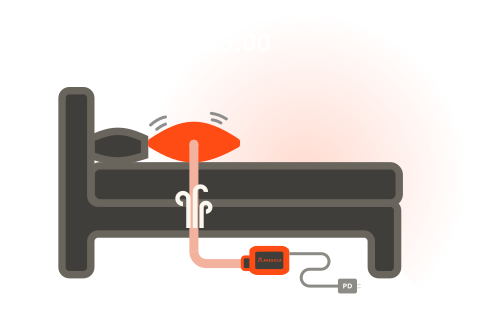
So he began to wonder: could a similar air-powered wake-up device be built—one that was small, lightweight, powered by a common AC adapter, and yet delivered the same wake-up performance? But achieving enough power to lift the body while keeping the system compact, energy-efficient, low-cost, and quiet proved to be a far greater challenge than he had imagined. After experimenting with many different operating principles, comparing them in practice, and building countless prototypes, he finally succeeded in creating a system with the ideal balance.


